today’s manufacturing world, speed isn’t just about reaction time—it’s about how quickly you can dig into a problem, implement effective fixes, and create learning that sticks. When issues arise on the line, teams often resort to familiar tools: a whiteboard, a template, or a hastily filled A3. But these methods often stop at surface-level fixes. What you need is a structured, collaborative flow—from problem statement to countermeasures to continuous improvement—all in one place.
That’s where SolvoNext PDCA transforms the routine. This isn’t software that just digitizes forms—it’s a lean ecosystem combining PDCA, DMAIC, 8D, A3 thinking, AI-driven dashboards, and real-time collaboration into one dynamic platform. Suddenly, root-cause investigations don’t live in emails or Excel—they unfold live, with evidence, ownership, and KPIs visible to everyone involved. Try it free and see how PDCA becomes muscle memory in action: https://www.orcalean.com/solvonext-pdca
Imagine an issue on the line—say quality rejects or unexpected downtime. Instead of brainstorming over noise, your team launches a PDCA workflow with SolvoNext: stitch the problem, trigger data capture, loop in engineering, root cause analysis, test fixes, measure outcomes—and loop again. Each PDCA cycle sheds data-rich insight, builds team alignment, and avoids “been there, done that” ghosts of past failures.
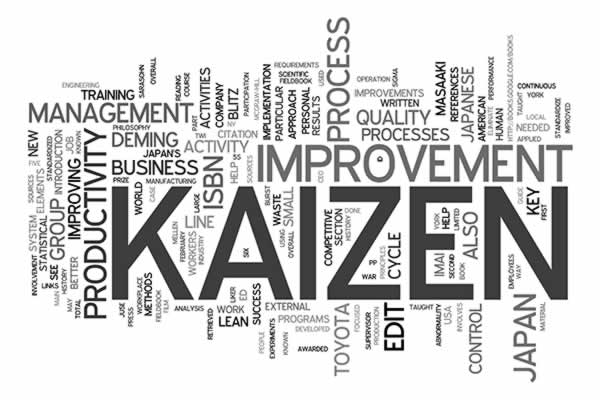
Combine this structure with A3 thinking and Kaizen, and you’re steering toward intelligent continuous improvement—fast, visible, and repeatable. The methodology encourages real problem clarity, shared hypotheses, quick tests, and rigorous evidence gathering. That makes your corrective actions more robust—and confidence grows when each step is framed, documented, and owned. See how PDCA, A3, and Kaizen work together with SolvoNext to keep fixes deep and lessons lasting: https://www.orcalean.com/article/enhancing-problem-solving-with-solvonext:-a3-pdca-and-kaizen-for-lean-manufacturing
To dig deeper, the classic A3 process deserves a mention. It’s not just a report—it’s a thinking framework that guides problems from identification to ownership and experimental improvement. Anchoring PDCA in A3 means you’ll clarify your current vs target state, propose fixes, embed evidence, and solidify the learning into your daily workflow. See how structured A3 cycles keep action and clarity aligned: https://www.orcalean.com/article/why-can’t-my-teams-find-the-real-root-cause-how-solvonext-bridges-the-gap-between-theory-and-action
What makes SolvoNext stand out is that it begins where traditional lean methods often stall—execution, follow-through, knowledge retention. Without siloed templates or disconnected systems, your team can push root cause validation, escalate with data, and lock in visibility across shifts and sites. Imagine being able to track defect trends, see problem ownership, and measure problem-to-resolution timelines in real time. That level of insight shifts you from reactive firefighting to proactive improvement.
In lean manufacturing, small steps like PDCA, Jidoka, Kaizen, and Standard Work have proven enormous, especially at Toyota. But real impact happens when these methods are digitized. You need a seamless engine—not a static checkbox—for continuous problem-solving and adaptation. SolvoNext brings that engine to life: https://www.orcalean.com/solvonext-pdca
Here’s how you can get started right away:
- Identify one chronic issue—a recurring quality flag, downtime zone, or bottleneck.
- Frame it in PDCA terms (Plan: define issue, Do: test a fix, Check: gather real data, Act: standardize what works).
- Use A3 thinking—document the gap, hypothesis, results, and learning in one flow.
- Deploy SolvoNext—run your PDCA in a digital workspace where the team can collaborate on data, visuals, follow-up.
- Celebrate learning, not just wins—acknowledge disproved ideas, near-misses, and successful trials equally.
- Scale rhythm, not rocket-ships—once one PDCA loop is closed, replicate across lines or categories.
Over a few weeks, you’ll notice something shift: fewer fire drills, quicker handovers, and a living knowledge base of problem-solving artifacts. Leaders start asking, “How quickly can we prototype fixes, test them, and lock them into operational practice?” The answer begins in methodology, and gets delivered through the right digital tool.
If you want to move problem-solving from siloed to system-wide, from reaction to rhythm, SolvoNext offers a clear springboard to elevate lean methods into operational muscle. It’s not about adopting new forms—it’s about building improvement that stays, scales, and accelerates.
Leave a Reply